The best camping trip ever?
August 13th by Chris Hunt
A desert river gives up its treasure
More than a decade ago, on my first-ever trip to Patagonia, I spent a couple of nights on the Rio Limay in Argentina as part of a group of anglers going the “unplugged” route. I’ll be honest — I wasn’t too thrilled about the prospect, largely because I’m one of many in my age range that needs to be tethered to the power grid. I’ve got a wicked case of sleep apnea. Without my CPAP machine, I don’t sleep. Period.
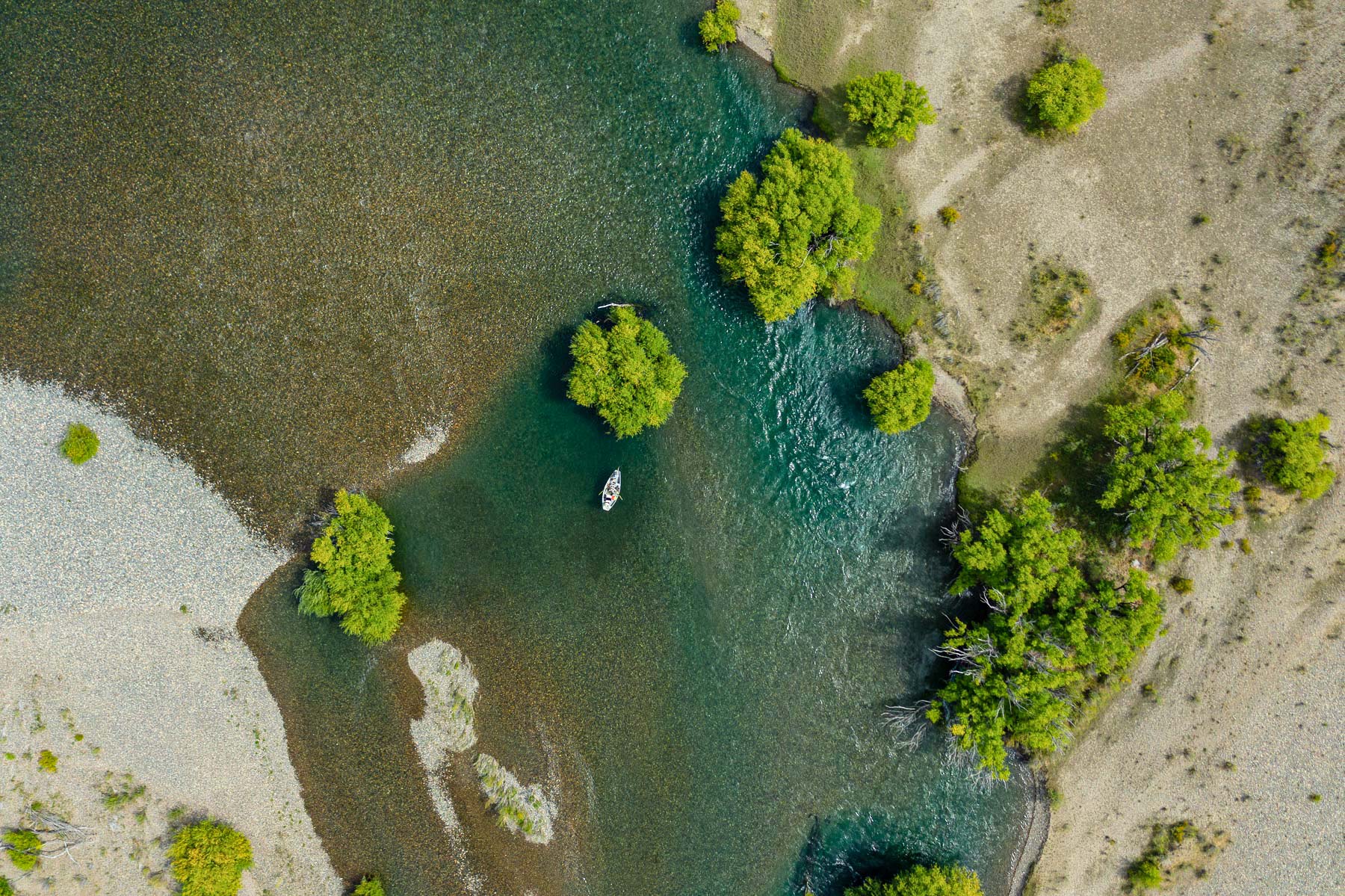
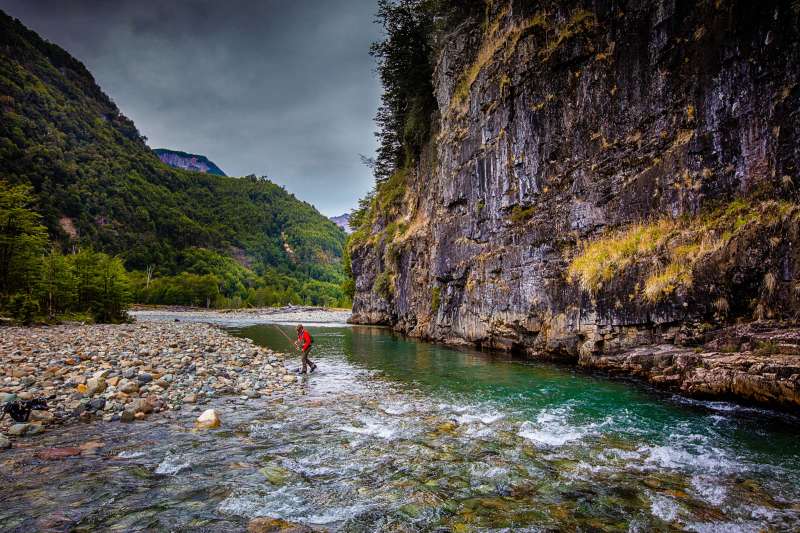
So, as we put in at the dam below Lago Limay, a massive impoundment that backs up the Rio Limay and the Rio Collon Cura in Argentina’s northern Patagonia region, I was a bit reluctant. Yes, the river looked amazing, with deep runs and boulders strewn randomly across the bedrock. But the notion of spending two nights “unplugged” had me nervous. Would they have a generator? Would I get a wink of sleep the next two nights? I pushed the fears to the back of my mind, and got busy fishing. And it didn’t take long to bring in two of my biggest brown trout ever.
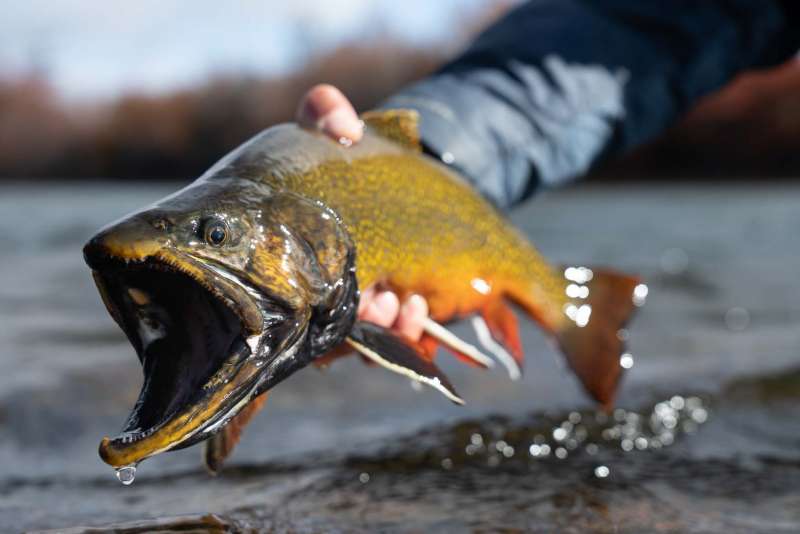
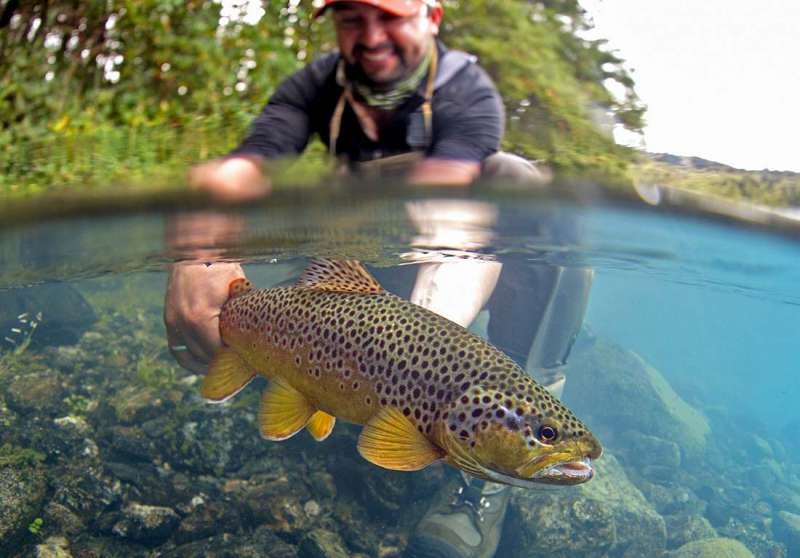
It was late March — fall in this corner of the world — and the browns that thrived in this stunning steppe-country tailwater were on the move. Within 20 minutes of pushing off in the drift boat, our guide, Peter, had me on a real lunker, pulled from the bottom by a bright yellow articulated bucktail pattern that I’ve never been able to completely replicate. Regardless, when we got the fish in the net, it measured a full 25 inches, nose to tail. At the time, I could count the fish I’d caught that were that big on one hand. It was a beast, and we took our time admiring the kype-jawed salmonid, snapping plenty of photos for the magazine piece I was planning to write about the adventure.
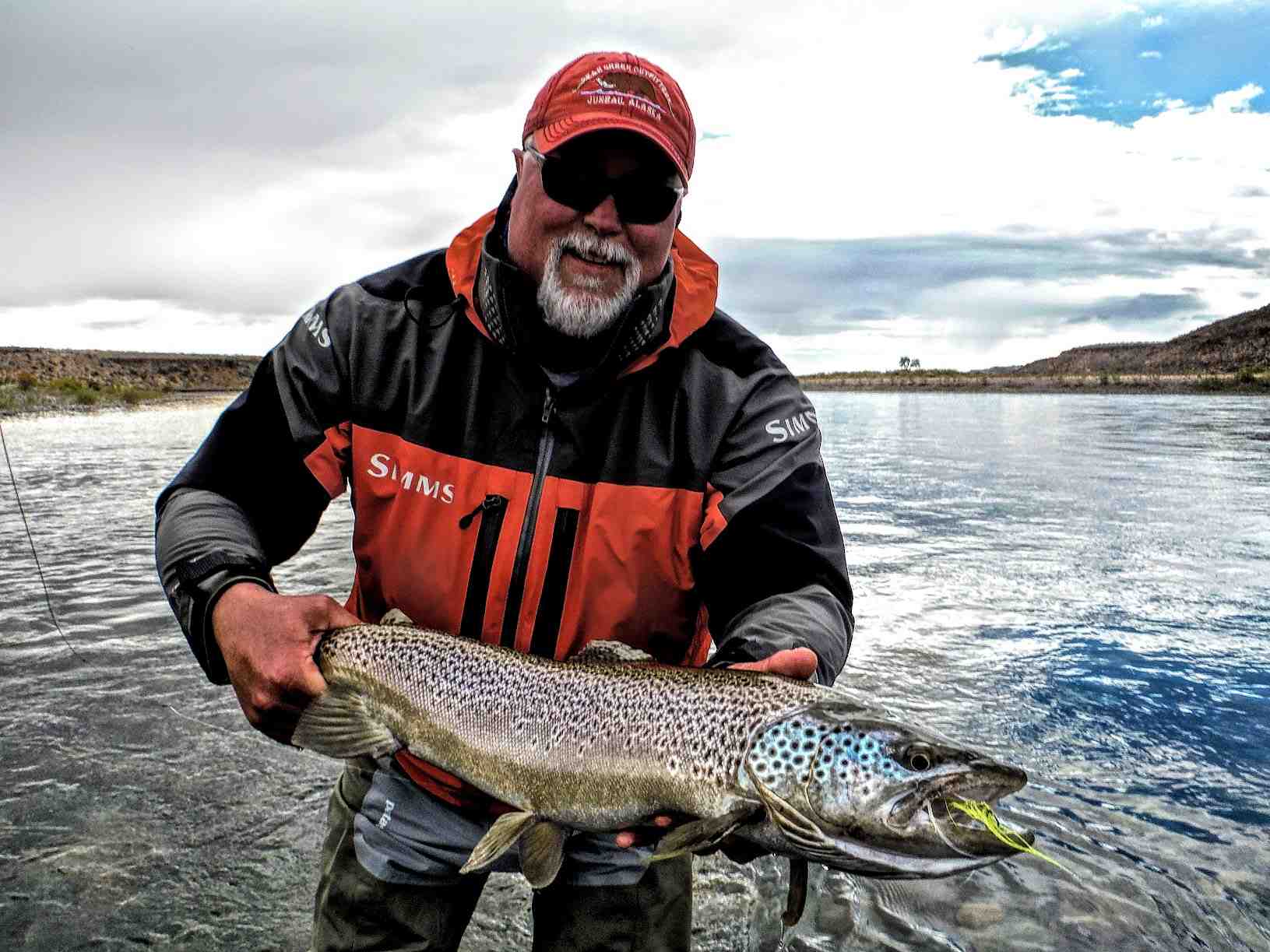 Not a bad way to start the camping trip
One and done? Nope.
Then it was over. The fish was gone, released to hopefully please another lucky angler plying the cold waters of this gorgeous desert river. Now, this is where a trip like this is supposed to “normalize.” A fish that big? That’s not normal. So, when, almost immediately, I hooked a second brown, I was quite certain that it would be in that more reasonable size range. You know, a solid 22 inches would have been about right.
I hooked this next fish in faster water, and Peter fought against the current and the boulder garden below the dam — it was as if the gods had taken a pepper shaker and just tipped it over above the water, dropping Corolla-sized rocks every few feet. So I wasn’t surprised that this big brown took a while to bring it. But I had no idea what I was about to see.
As Peter walked the net over to me, he had a big grin on his face.
“I think it’s bigger,” he said, clearly doing a mental comparison between the fishin the net and the fish that, minutes ago, notched a spot on my top five.
“No way,” I replied, shaking my head. “No friggin’ way.”
Peter pinched the fish’s tail and stretched the tape to its ample, butter-tinged snout.
“That’s 27 inches and change,” he said. I was floored.
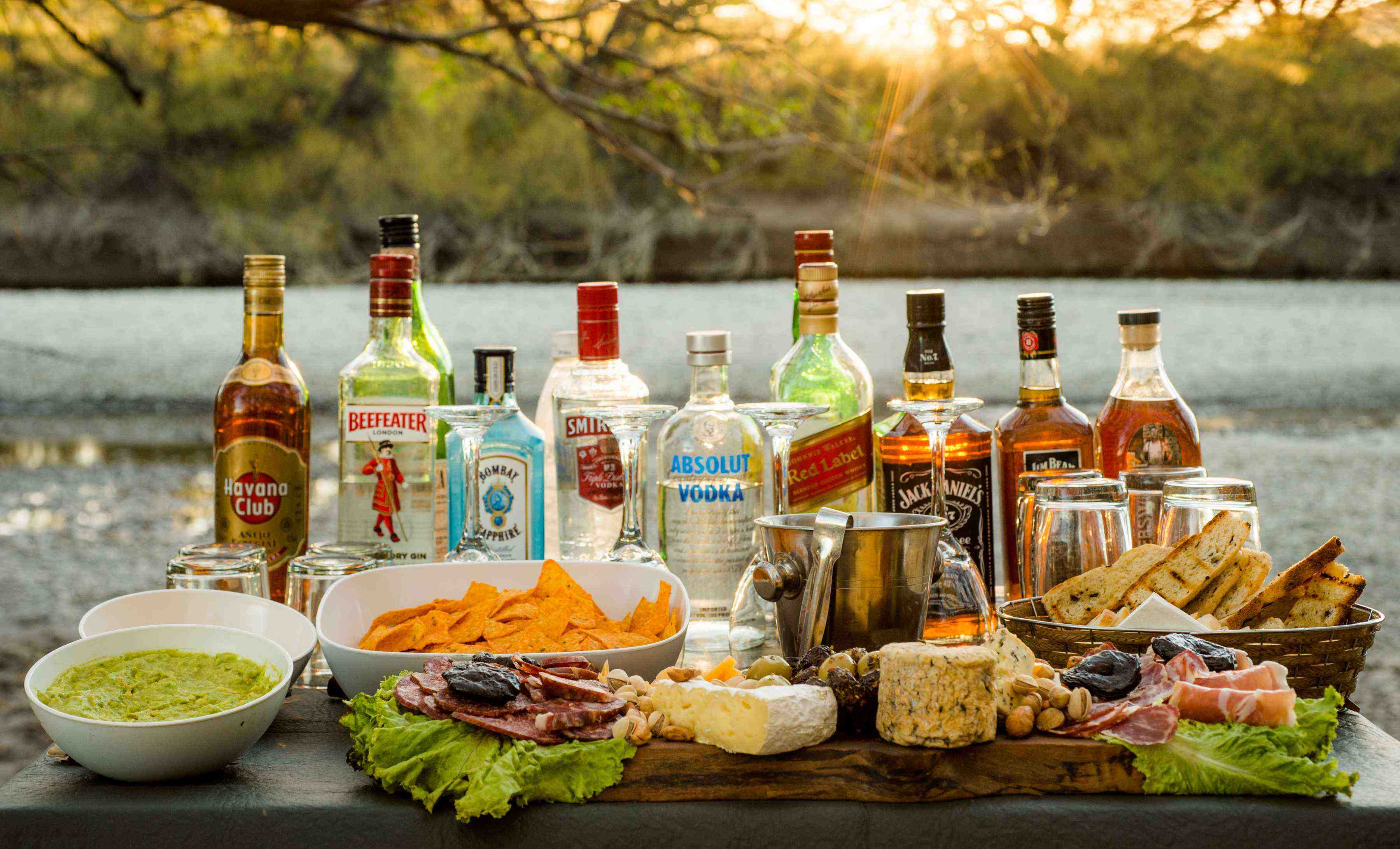 Best camp bar in the world?
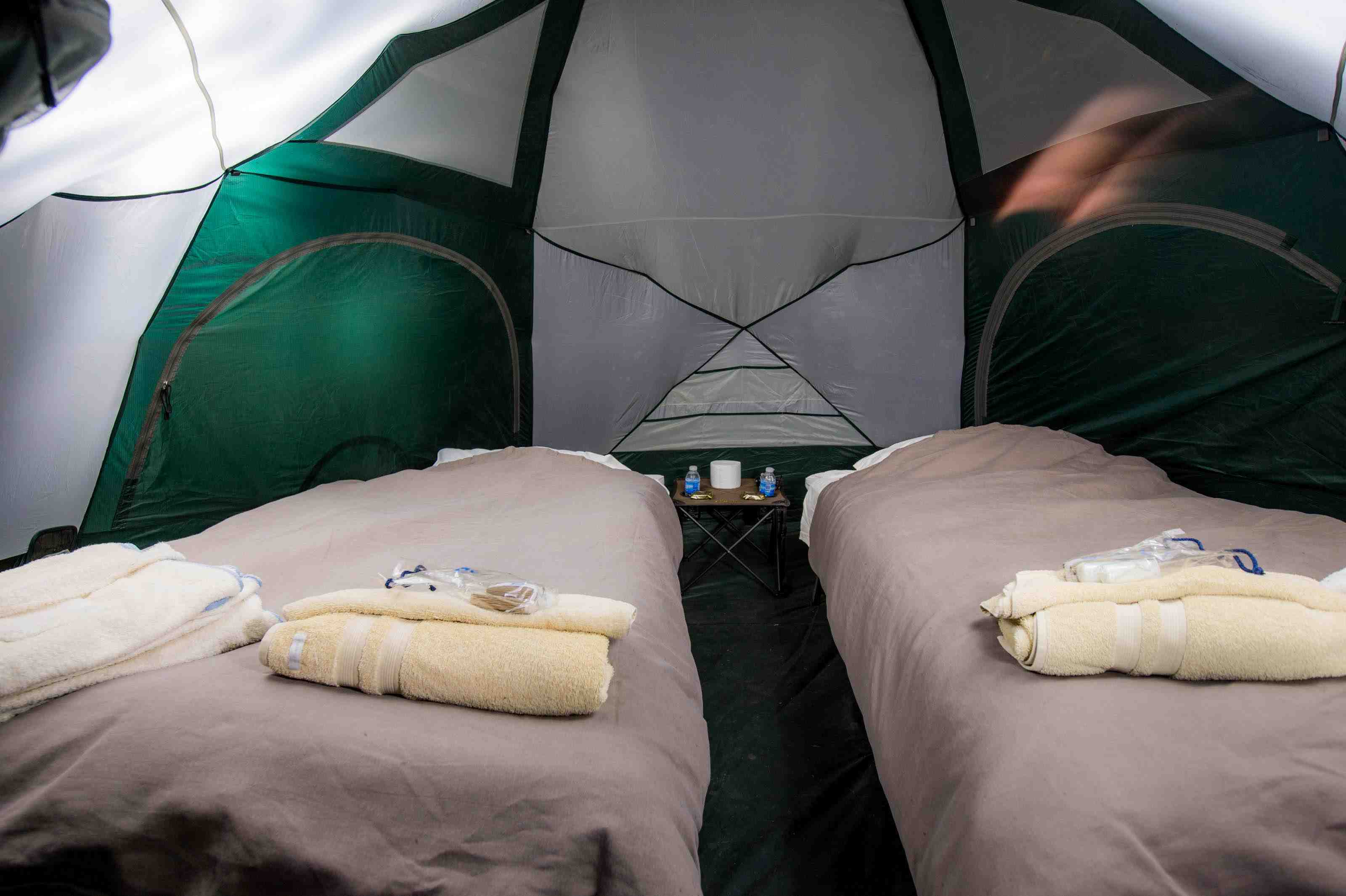 Sweet dreams
A night in the tent
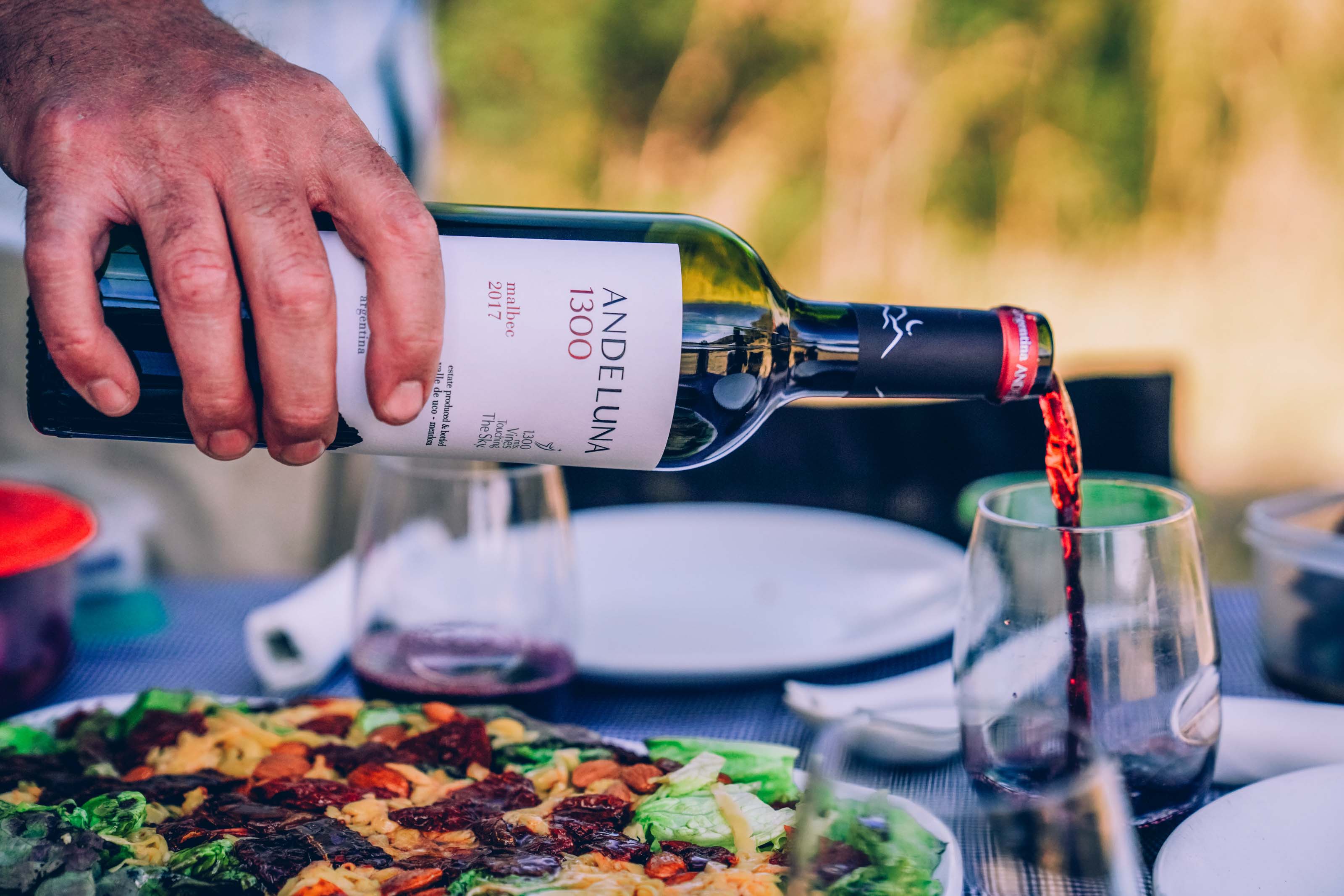
I grew up in the mountains of Colorado, and I’m no stranger to a chilly night in a tent. But what the folks putting this stellar adventure together for us had in store for us was anything but a typical camping trip. First, there were cocktails. The outfitters had a full bar set up next to the “dining tent.” Whiskey in hand, we toasted a pretty stellar day that not only saw the two really big fish come to hand, but a host of 18- to 22-inch browns grace the net, too. Then we drove into a stunning charcuterie spread that would have been a perfectly fine meal on its own, and finally, dinner. It was wonderful — Argentine red stag schnitzel served with a risotto side dish, oven-baked bread, and a fresh green salad. Oh, and a seemingly endless supply of absolutely delectable Argentina malbec.To top it off, a slice of cheesecake magically appeared for a riverside dessert.
Then, the entire crew — guests, guides, cooks, and the incredible support team that makes an evening like this happen — gathered around the fire, and the fishing stories commenced. It was like any other camping trip I’ve ever been on. Only better.
Then, buzzed by whiskey and wine, we wandered through the willows to perhaps the most ideally appointed canvas tent I’ve ever seen. Our beds were elevated cots complete with fluffy, warm sleeping bags, and the tent was perfectly heated by a small wood stove. Electricity? Yup — a battery bank just for me. I slept like a rock.
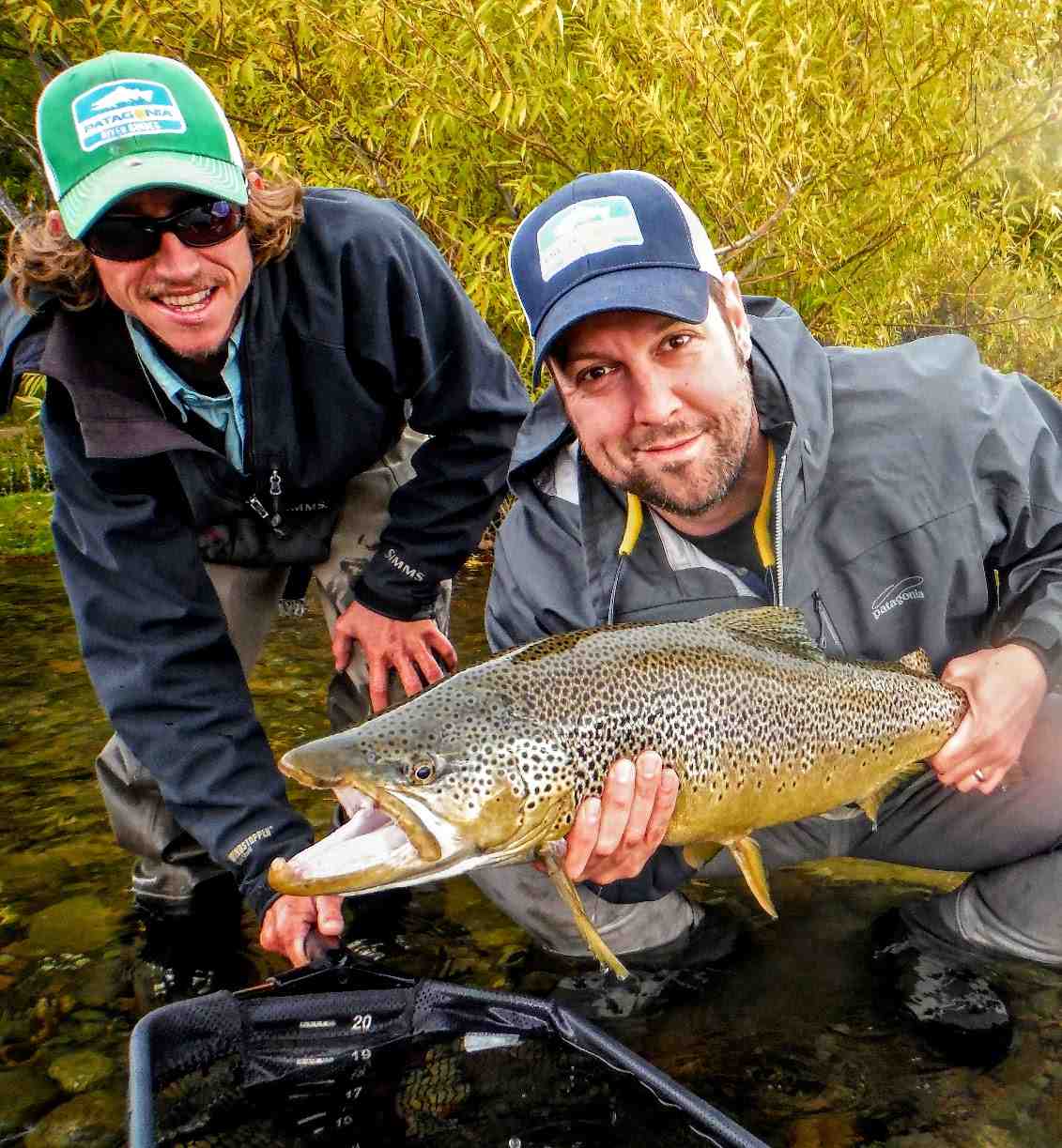 What 30 inches of Rio Limay brown trout looks like
The beast of the Limay
We’d shoved off from the bank after a perfectly civilized morning that included a hot shower and a full breakfast, and my fishing partner, Chad, made but a single cast. His streamer came to an abrupt halt, which made him think he’d come tight to the bottom. That was not the case.
Our guide this day, Santos, quickly pulled back on the oars, and then, as Chad described it, the bottom of the river started to move. I caught a glimpse of the fish on the business end of Chad’s tippet, and my jaw hit the bottom of the drift boat.
“That’s a big one,” Santos said through the grunts and groans that come with rowing against the current of this massive river. He got to some shallow water and let the anchor fall. I hopped out of the boat, camera in hand. Santos followed with the net. Chad, still standing in the back of the boat could only watch as Santos slipped the lip of the net under the big brown. We stared at the massive fish.
“That’s the biggest brown trout I’ve ever seen,” I said. Santos nodded, but tried to remain calm.
“Me, too,” he said.
The Rio Limay is no secret. It’s known the world over as a “big fish” river, and its reputation is deserved. The unplugged program put on by the folks Patagonia River Guides is absolutely stellar — Chad and I are living proof.
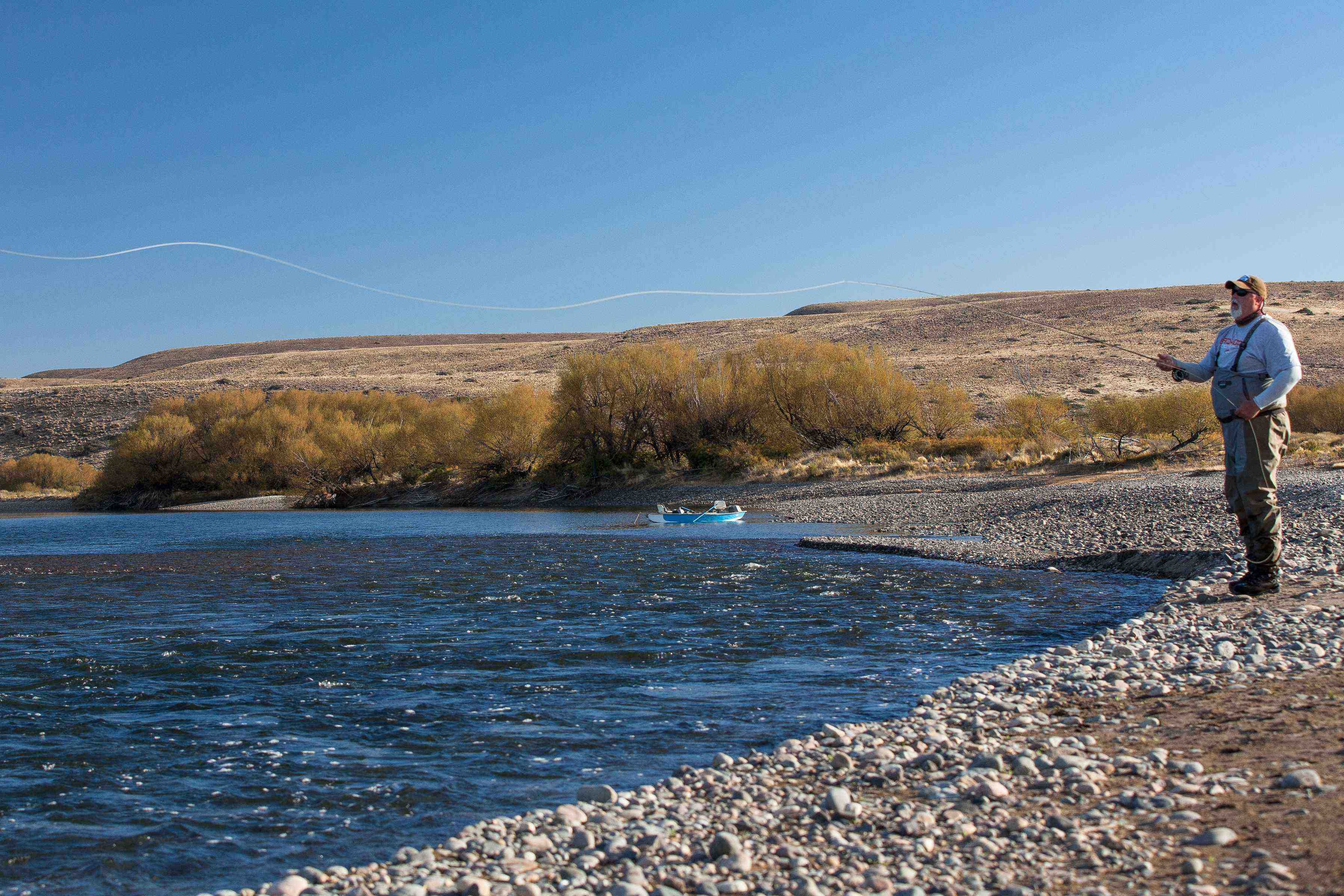 Fishing the minnow run
An exclamation point
While our time on the Limay came to an end, our visit to Patagonia was not yet complete. From the takeout on the starkly beautiful desert river, we ventured west to the Quemquemtreu, the storied estancia that helped trout fishing in Argentina really take off. It was here where the likes of Earnie Schwiebert and Kirk Gowdy shined a light on Patagonia as a trout-angling destination. The beautiful ranch provides access to the Rio Collon Cura, and, in the fall, this river is the place to be.
Every March and into April, the Collon Cura sees what’s known as “the minnow run,” when a massive migration of minnows pulses out of Lago Limay and into the river to spawn. They’re followed from the lake by scores of giant rainbows and brown trout, which are joined by the river’s already sizable resident fish population. This makes for one of the most special experiences in Patagonia fly fishing.
And Chad and I hit it perfectly. Near the end of our first day on this new river, we stopped at a wide, sweeping tailout that pushed downstream for maybe 100 yards or so before sliding over a set of rapids.
“That’s our takeout,” our guide for the day, Alex, said, pointing at a little gravel boat ramp below that set of rapids.
“We’re almost done?” I asked, thinking that it felt a bit early to be arriving at the end of our float.
“Oh, no,” Alex said. “There’s a lot of fishing left.”
And he was right. For the next two hours, we barely moved as we both enjoyed some of the best fly fishing of our lives. The minnow migration happened literally at our feet, and the rainbows and browns threw themselves at our flies, even hitting skated dry-fly patterns that created some chaos on the surface.
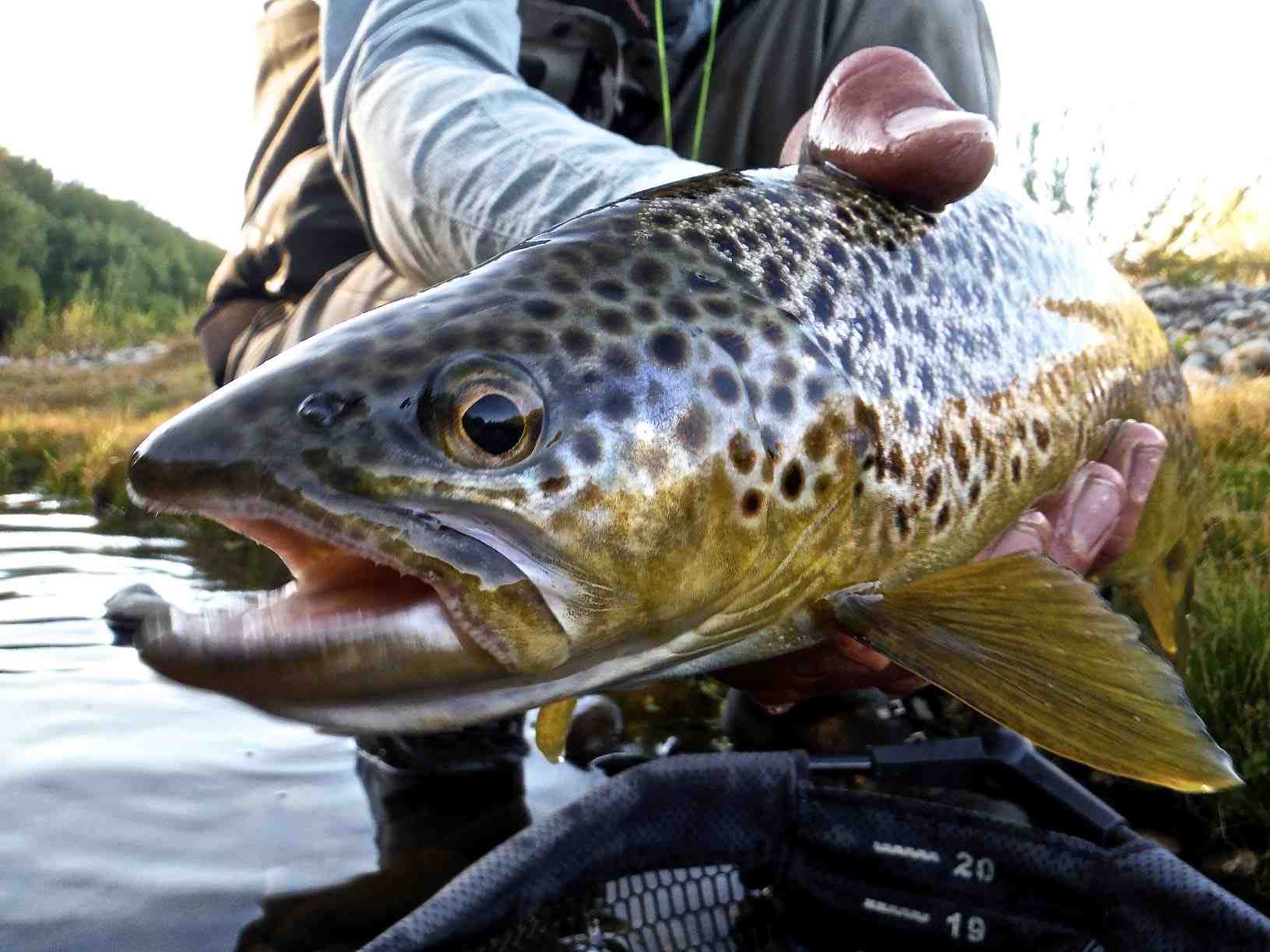 A nice brown busted chasing minnows
Everything Patagonia is supposed to be
In all, my first trip to Argentina was just as it was supposed to be. Over two weeks, I enjoyed some stellar fly fishing, above and beyond the incredible days on the Rio Limay and the Rio Collon Cura. I met some fantastic people who have worked hard to elevate Patagonia’s angling opportunities and make Argentina’s great rivers accessible and, all things considered, a rather affordable endeavor. I was spoiled rotten, frankly. And I knew it.
I’ve been back to Argentina, and I’ve put in even more time across the Andes in Chile, where the fishing is every bit as special. But that first trip was life-changing. And, without a doubt, it was the best camping trip ever.